
A period of stasis appears to have set in for the Canadian housing market. In previously hot markets in the prairies, balanced conditions are taking hold. Year-over-year prices are relatively flat in Calgary and Edmonton, whereas at the start of last year both were drum-tight markets, according to the RPS House Price Index. Meanwhile, cities in the Greater Toronto Area and B.C.’s Lower Mainland continued to be defined by the frostier characteristics that materialized following the pandemic boom.
However, RPS has observed notable exceptions elsewhere in the country.
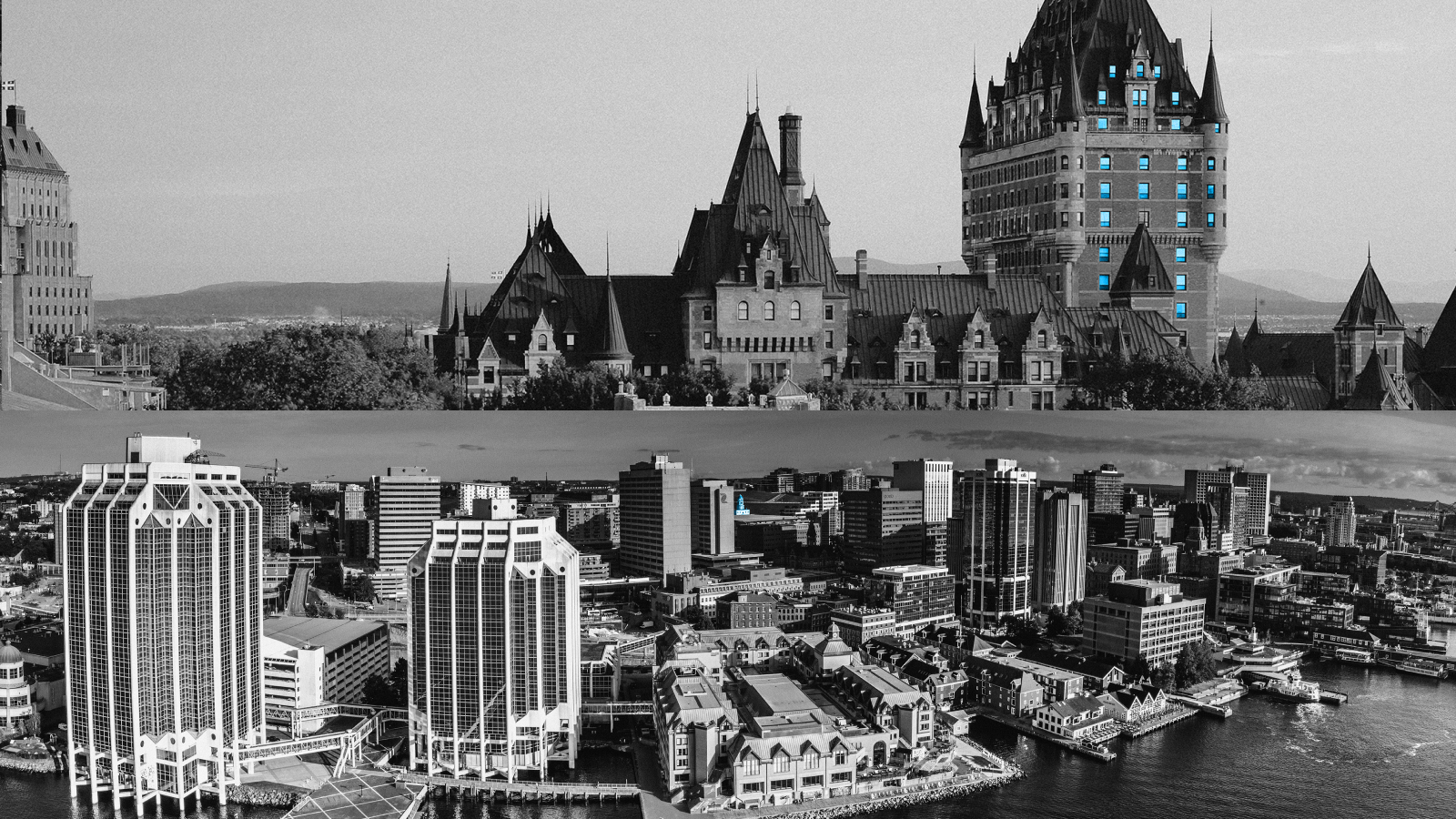
In particular, some of the most pronounced shifts in the Canadian housing market right now are playing out in secondary — and in some cases, tertiary — markets. Prime examples are Halifax and Quebec City, as well as smaller markets with a high exposure to the effects of tariffs.
The international student effect
In 2024, the federal government began dramatically reducing the number of international students that it would allow into Canada. It was part of a wider effort to limit immigration with the aim of alleviating “some pressure in the housing market.” However, the move has possibly had unexpected consequences for certain secondary markets, particularly on the east coast.
Policymakers had anticipated that the smaller provinces would see study permit approvals drop by no more than 10% in response to the federal clampdown. In reality, Nova Scotia — which is often referred to as Canada’s University Capital for its high concentration of post-secondary institutions relative to its population — saw approvals plunge by approximately 65% in 2024, according to a report from the Office of the Auditor General of Canada.
A sharp drop in the number of international students in the Maritimes could have helped meaningfully shift supply-demand fundamentals in Halifax and its environs, according to one economist we spoke with. “We have a lot tighter restrictions on international students, so there’s a lot less demand for rental,” says Kari Norman, a senior economist at Desjardins. With a decreased need for student housing, some investors might have exited the market, creating more buyer-friendly conditions for end-user households.
It is difficult to gauge the full extent of current investor activity, but we know from existing data that a higher proportion of residences in the Maritimes are in investors’ hands. Some 31.5% of Nova Scotia’s residential properties were owned for investment purposes as of 2022, compared to 20.2% in Ontario and 23.3% in B.C., according to Statistics Canada’s Canadian Housing Statistics Program.
Home price momentum in Halifax appears to at least reflect such a shift. In April, Halifax home prices declined by 5% year-over-year, according to the RPS House Price Index.
Another headwind for the market is a decline in inbound migration from other provinces. Interprovincial migration from Ontario, which had soared during the pandemic and boosted Nova Scotia’s housing market, has pulled back substantially. Remote work, a desire for more outdoor space during lockdowns, and affordability was likely drawing more households out east at the height of Covid-19. Coinciding with return-to-office mandates and somewhat improving affordability in Ontario, that trend has been abating.
In fact, between Q4 2021 and Q4 2025, the number of Ontarians relocating to Nova Scotia declined by about 50%, according to Statistics Canada.
Quebec rebuffs the national decline
Strong and sustained price gains in Quebec — and especially Quebec City — is one of the biggest stories of the Canadian housing market over the past two years. As more markets enter negative territory, Quebec City continues to outperform — and by a considerable margin.
As of May, Quebec home prices increased 11% annually, according to the RPS House Price Index. This runs contrary to the national index price, which declined 4% year-over-year, weighted by falling values in B.C. and Ontario.
So what has been driving these outlying gains?
Employment in Quebec City, which is an education hub and also benefits from government employment, is solid. It also boasts relative affordability, which supports demand.
Job losses in the wake of the trade war with the U.S. seem to have created economic hurdles in markets across the country. In fact, home prices are down in 12 of the 19 Canadian housing markets that are most-exposed to U.S. tariffs, including by 10% or more in Oshawa, Belleville, and Brantford.
Yet across much of Quebec, the labour market is defying expectations. Even in Saguenay — which has among the highest exposure to tariffs in the country, according to the Canadian Chamber of Commerce — home prices are elevated. (As of April, the index price of a Saguenay home was up 10% year-over-year.)
An exception to Quebec’s labour-force strength is Montreal, but here too price growth is frothy. Montreal’s unemployment rate was pegged at 7.7%, according to the latest Labour Force Survey from Statistics Canada. That is the highest level in a decade, excluding pandemic-related peaks, though home values climbed 8% year-over-year in April.
Montreal home values are “supported by several structural factors,” says Charles Brant, director of market analysis at Quebec Professional Association of Real Estate Brokers.
These factors include a lack of supply, high construction costs that limit new development, and population growth, he says: “Although slower immigration could gradually reduce household formation and ease pressure on housing demand, the effects are expected to remain gradual given the housing supply deficit accumulated over recent years.”
About the RPS House Price Index (HPI)
The RPS House Price Index is the most comprehensive source for house price data in Canada and includes the median house price dollar values and extensive additional data by property type from a national to the local level. For more information, the complete methodology is available.
Long-Term Price Trends
The RPS House Price Index is based on the latest monthly actual home values in 1,000 towns and cities across the country.
The index shows how property values have changed over time, relative to a base period (Jan. 2005 = 100). An HPI value of 300 means property values have tripled (on a smoothed, adjusted basis) since 2005.
The HPI does not indicate the actual price of a property. It demonstrates how prices have moved relative to the base period.
Market Momentum
A rising index indicates an upward price trend. A falling index suggests price softening or correction. Since the HPI smooths noise and filters out outliers, it gives a more stable, reliable picture of pricing trends than monthly medians.
The HPI is based on an up-to-six-month rolling average, so it does not reflect short-term volatility, such as one-off surges in prices from luxury sales. All figures are rounded to the nearest whole number.
Access the RPS House Price Index Data
This article provides a summary of the key trends from the April 2026 RPS House Price Index. If you’d like the underlying data, sign up for the RPS HPI Public Release and receive the complimentary dataset each month, delivered directly to your inbox.
Sign up for the RPS House Price Index Public Release →
Get early access to the RPS House Price Index monthly analysis and public dataset, delivered straight to your inbox each month.
For more granular insights, including city and FSA-level data across five core property types, the Enterprise version of the RPS House Price Index provides the depth needed to identify where above-average gains are emerging and where cooler conditions are taking hold.
To learn more about the RPS House Price Index or discuss access to the full dataset, please visit here.

Josh is a staff writer at RPS. He has been reporting on the national real estate market for 10 years, including for some of Canada’s largest newspapers and magazines.